
SAIS Webinar | The Thinking Problem: A Science of Learning Solution for AI in Schools
Zoom
Event Details
Most school AI policies focus on academic honesty. Dr. Ian Kelleher argues that misses the real issue: whether students are still doing the cognitive work that learning requires.
Join Dr. Kelleher for this webinar to learn what the research shows: When students use AI to bypass difficult mental tasks, they can fall into a cognitive bias loop, overestimating their own knowledge while failing to build the expert reasoning patterns that come only through sustained practice.
Dr. Kelleher will share a decision-making framework to help educators ensure AI supports mental engagement rather than replacing it.
Registration:
Members $0 | Non-Members $39
Who Should Attend: Academic Administrators, Academic Support, Accreditation Coordinators, Admissions/Enrollment, Advancement/Development, Assistant Heads, College Counselors, School Counselors, Division Heads, Department Chairs, Deans of Students, Ed Tech, Inclusion & Belonging, First-Time Heads, Heads of Schools
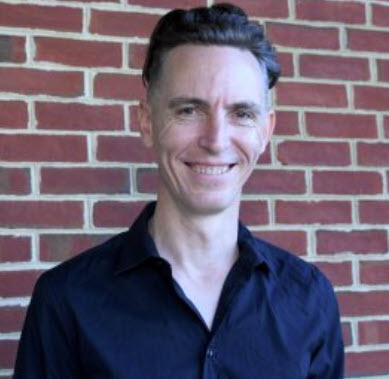
Speaker: Ian Kelleher, Dreyfuss Family Chair of Research for the Center for Transformative Teaching and Learning (CTTL), St. Andrew's Episcopal School
Ian Kelleher holds a PhD from the University of Cambridge and is the Dreyfuss Family Chair of research for the Center for Transformative Teaching and Learning (CTTL) at St. Andrew’s Episcopal School in Potomac MD, US, and has also been a high school science teacher for thirty years and counting. The CTTL’s work focuses on translating the research base of cognitive science, education, and neuroscience into highly practical frameworks—designed by educators for educators, but rigorously aligned with research. They pay particular attention to how learning actually happens in the brain and what that means for teaching, assessment, and—increasingly—the use of artificial intelligence in educational settings. Ian is the co-author of the landmark book Neuroteach: Brain Science and the Future of Education, has appeared at numerous conferences, and has developed and delivered professional learning programs for teachers and school leaders across the US and around the world. This position paper emerged from that work—from the questions schools were asking, the mistakes they were making, and the absence of a Science of Learning based framework in almost every conversation about AI that we encountered. The line we kept coming back to was, how can you hope to maximize the use of AI in education if you don’t know how students’ brains learn best and flourish?